
 Image 1 of 1
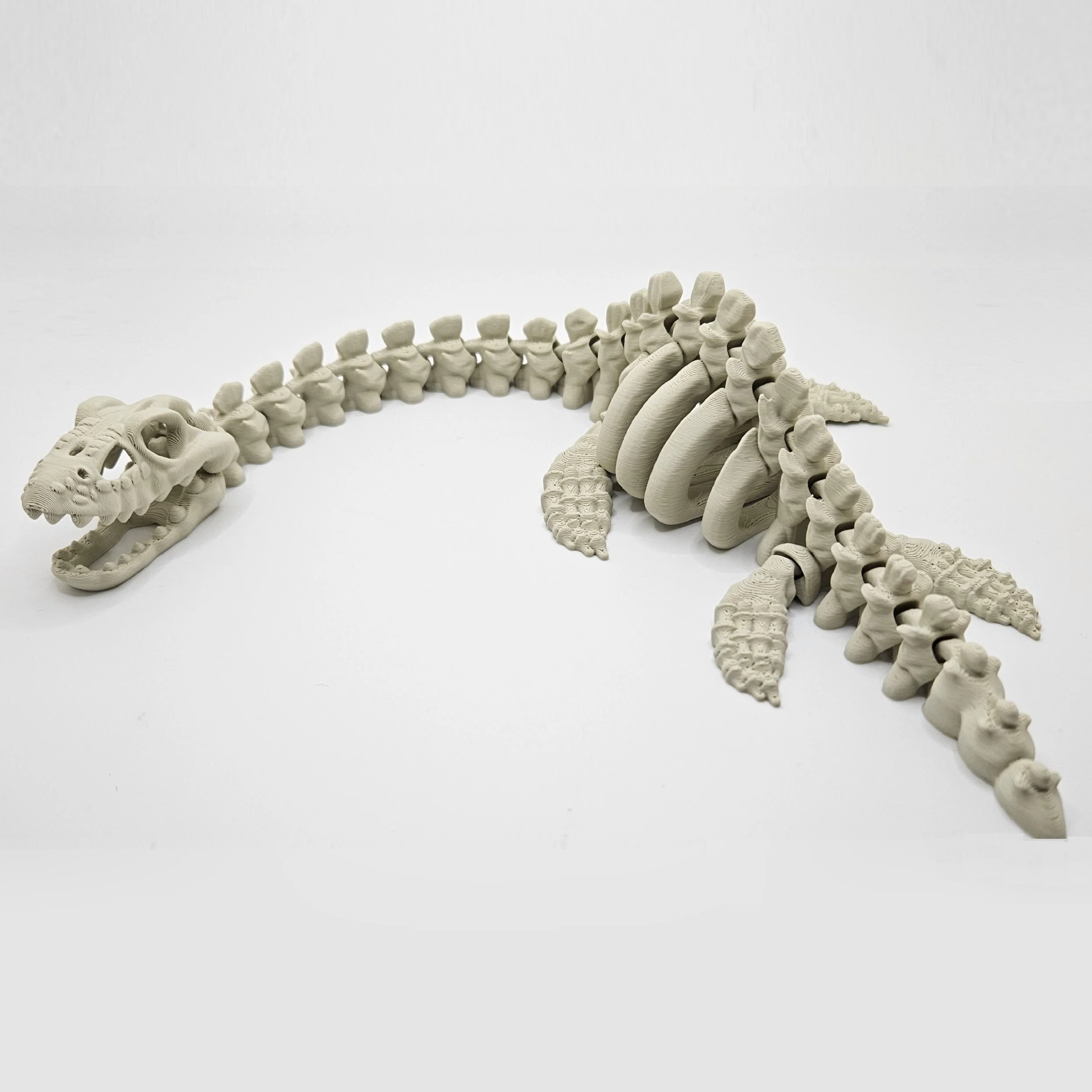
A replica Elasmosaurus skeleton brings an instant sense of adventure to any room, letting kids and adults dive into the thrill of prehistoric discovery. Its long, articulated neck and detailed skeletal joints make it easy to pose, study, and admire, turning the model into both a playful centerpiece and an educational showpiece. The tactile experience of adjusting each segment helps spark curiosity, imagination, and hands‑on learning for anyone fascinated by ancient marine life.
Elasmosaurus, a marine reptile from the Late Cretaceous period, is best known for its astonishingly long neck—stretching over 20 feet and making up nearly half its body length. First described in 1868, this ocean‑dwelling predator glided through the Western Interior Seaway using four powerful flippers, hunting fish and squid‑like creatures. Its discovery helped shape early paleontology and remains a favorite among fans of ancient marine reptiles.
A replica Elasmosaurus skeleton brings an instant sense of adventure to any room, letting kids and adults dive into the thrill of prehistoric discovery. Its long, articulated neck and detailed skeletal joints make it easy to pose, study, and admire, turning the model into both a playful centerpiece and an educational showpiece. The tactile experience of adjusting each segment helps spark curiosity, imagination, and hands‑on learning for anyone fascinated by ancient marine life.
Elasmosaurus, a marine reptile from the Late Cretaceous period, is best known for its astonishingly long neck—stretching over 20 feet and making up nearly half its body length. First described in 1868, this ocean‑dwelling predator glided through the Western Interior Seaway using four powerful flippers, hunting fish and squid‑like creatures. Its discovery helped shape early paleontology and remains a favorite among fans of ancient marine reptiles.