
 Image 1 of 1
Mastodons were Ice Age megafauna, not dinosaurs, but their deep prehistoric roots make them just as captivating. They belonged to the genus Mammut and lived from the Miocene through the early Holocene, roughly 23 million to 11,000 years ago, roaming across North America as large, elephant‑like browsers adapted to cold, forested environments. Their fossils show a long evolutionary history and wide geographic spread, with recent ancient‑DNA studies revealing that mastodons migrated long distances and were more genetically diverse than once believed.
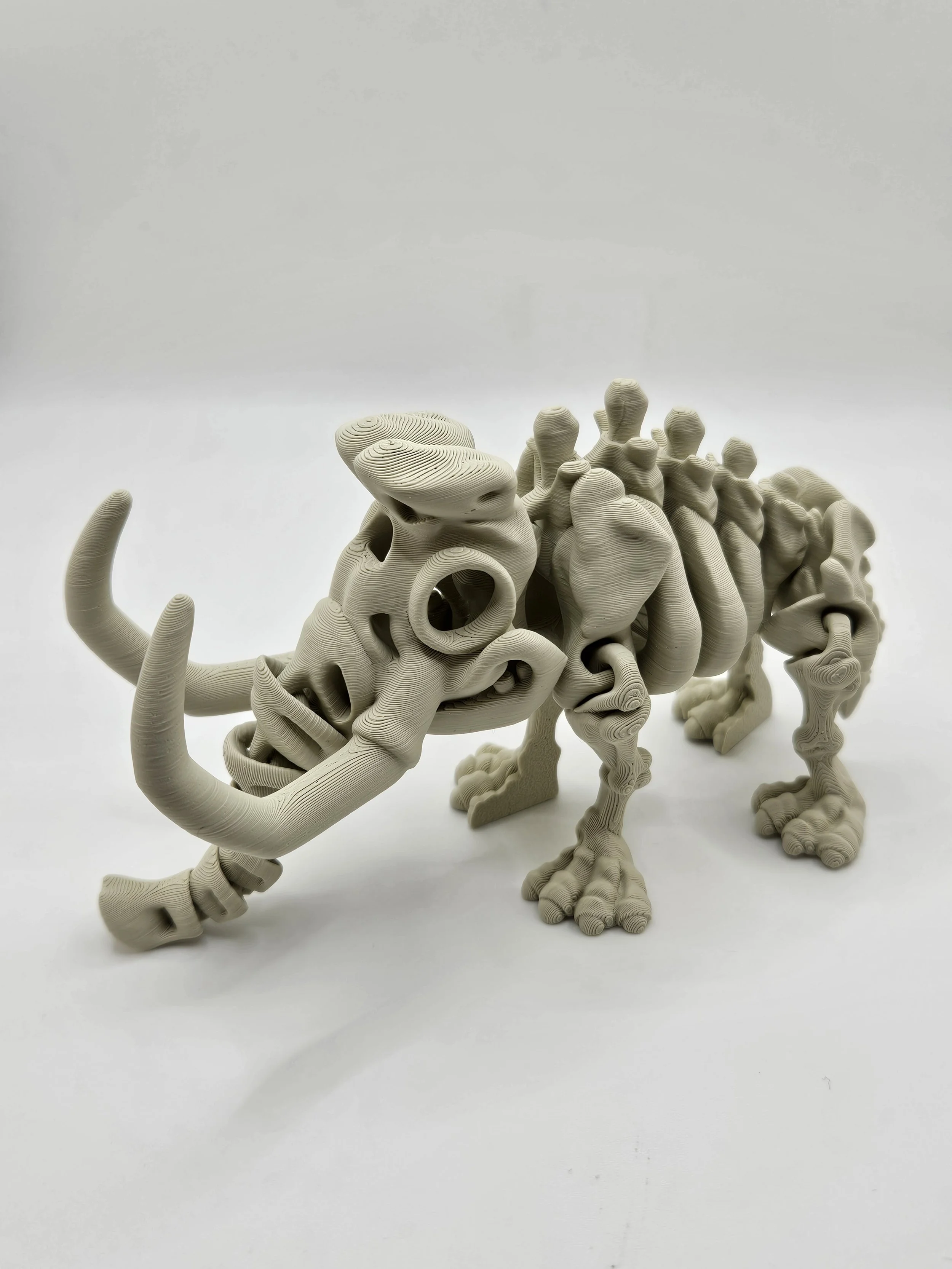
A 3D‑printed mastodon made from PLA turns a prehistoric giant into something you can hold, pose, and explore. The tactile experience makes the animal’s anatomy and proportions feel real in a way pictures can’t. Because PLA is lightweight and durable, the model becomes a hands‑on learning tool—you can move it around, compare it to other Ice Age creatures, or use it to visualize how mastodons might have navigated forests and glaciers.
For kids and adults alike, it’s a playful bridge between ancient natural history and modern making, letting you experience a long‑extinct creature through a creative, interactive object rather than just reading about it.
Mastodons were Ice Age megafauna, not dinosaurs, but their deep prehistoric roots make them just as captivating. They belonged to the genus Mammut and lived from the Miocene through the early Holocene, roughly 23 million to 11,000 years ago, roaming across North America as large, elephant‑like browsers adapted to cold, forested environments. Their fossils show a long evolutionary history and wide geographic spread, with recent ancient‑DNA studies revealing that mastodons migrated long distances and were more genetically diverse than once believed.
A 3D‑printed mastodon made from PLA turns a prehistoric giant into something you can hold, pose, and explore. The tactile experience makes the animal’s anatomy and proportions feel real in a way pictures can’t. Because PLA is lightweight and durable, the model becomes a hands‑on learning tool—you can move it around, compare it to other Ice Age creatures, or use it to visualize how mastodons might have navigated forests and glaciers.
For kids and adults alike, it’s a playful bridge between ancient natural history and modern making, letting you experience a long‑extinct creature through a creative, interactive object rather than just reading about it.